
- By LvYin Grass Team
- May 24, 2026
- Landscape Design
Why Has Artificial Turf Always Been a Classic and Popular Option in Landscape Design Over 30 Years?
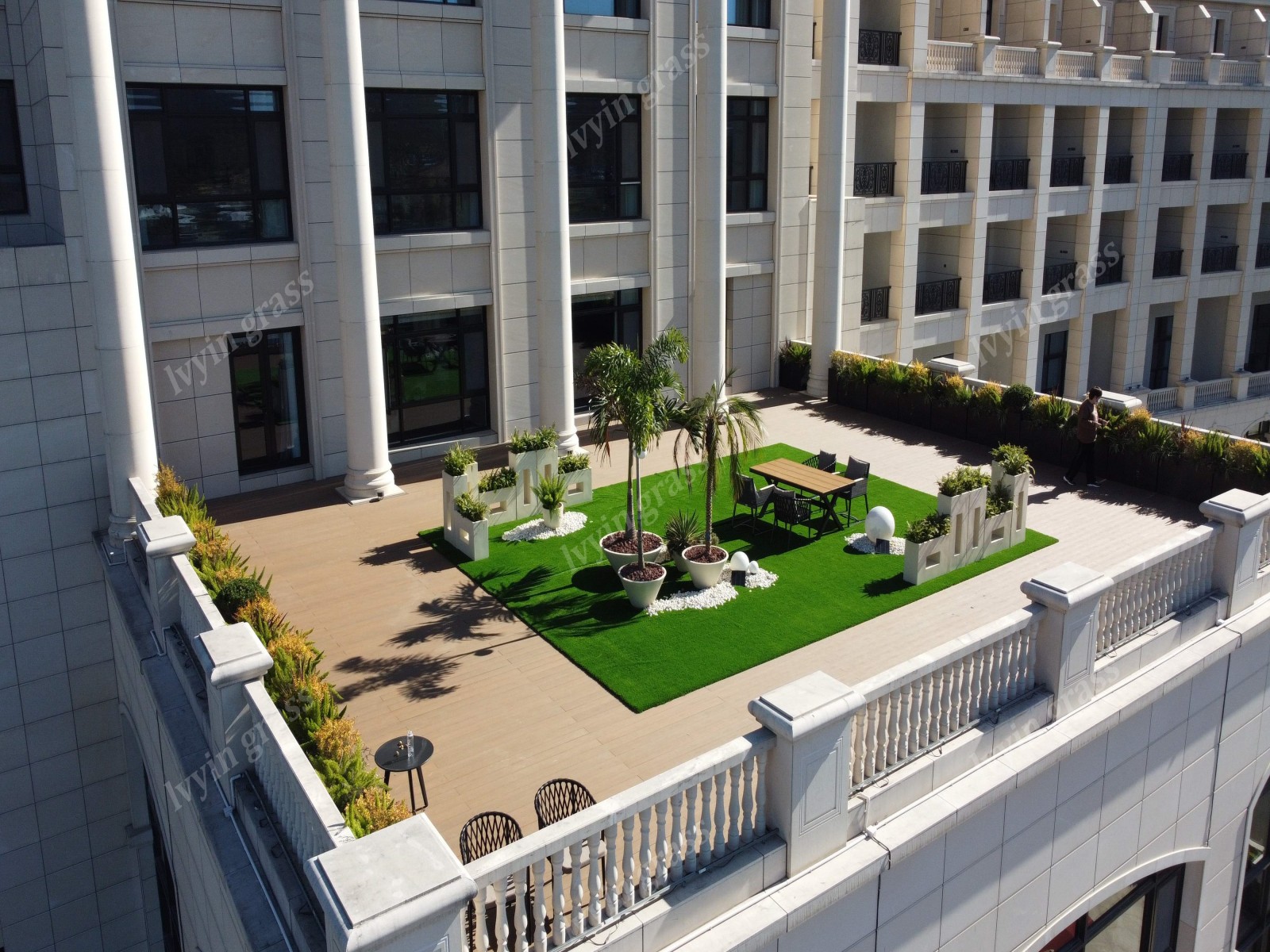
Artificial turf has been used in landscape design for decades. Although materials, yarn technology, and production methods have improved over time, the reason for its popularity remains simple: it solves many practical problems.
As a factory involved in artificial grass production since 1998, we have seen artificial turf used in gardens, hotels, schools, rooftops, commercial spaces, and public areas across different markets.
It Keeps a Stable Green Appearance
Natural grass can be affected by weather, soil, sunlight, and maintenance. Artificial turf keeps a green and tidy appearance in many environments, which is useful for commercial entrances, hotel landscapes, rooftop gardens, display areas, and public leisure spaces.
It Reduces Daily Maintenance
One of the main reasons artificial turf remains popular is lower maintenance. It does not need mowing, watering, fertilizing, or replanting like natural grass. For property owners and commercial projects, this can save labor and time.
It Works in Places Natural Grass Cannot
Artificial turf can be installed in many areas where natural grass is difficult to grow, including balconies, rooftops, indoor spaces, shaded areas, exhibition booths, and concrete surfaces. This flexibility gives designers more freedom.
It Has Become More Natural-Looking
Early artificial grass was often simple and less realistic. Today, yarn shapes, color combinations, thatch layers, and pile structures have improved a lot. Modern landscape turf can look softer and more natural, while still keeping the benefits of synthetic material.
It Fits Different Budgets and Applications
Artificial turf is not one single product. It can be made for different needs, from economical decorative grass to higher-density landscape turf for commercial projects. This makes it suitable for distributors, contractors, designers, and project buyers with different budgets.
Factory Perspective
From a manufacturing point of view, good artificial turf depends on stable raw materials, proper yarn selection, backing quality, coating control, and inspection before shipment. A good-looking product should also be practical after installation.
Conclusion
Artificial turf has remained popular for over 30 years because it is practical, flexible, and easy to maintain. For landscape design, it offers a reliable green surface in places where natural grass may be difficult or expensive to manage.
The growth of LvYin has paralleled the evolution of artificial turf, from limited product variety to diverse categories and from specific applications to almost every corner of the world. It is gratifying to witness artificial turf flourishing and improving in this way.